Hear AED: Turning LINE into a Lifesaving Tool for Emergency Response
A complex set of requirements, delivered entirely through a LINE Official Account. Since 2022, Emson has worked to improve Taiwan's first-aid environment — from CPR/AED education to information integration — but they were missing an effective, continuously evolving digital tool.


Lives saved
27 confirmed lives saved
19.3%
AED bystander retrieval rate improved by more than 15 points
11,000+
First-aid cases handled
Requirements
We met the Taiwan Emson Safety Promotion Association at a startup competition, kicking off a great long-term partnership. Emson wanted to build a system that gets help to cardiac-arrest victims faster. But AED data is scattered across government agencies — including entries for devices that no longer work — so how do you raise the rate at which bystanders actually use one?
- AED data is scattered across the Ministry of Health and Welfare, the Ministry of Education, and various city/county governments, in inconsistent formats and not updated promptly — nearly 40% of registered locations have devices that are missing or broken
- Asking the public to download a dedicated first-aid app is itself a high barrier — when an emergency happens, it's nearly impossible for a bystander to already have it installed and know how to use it
- Verifying a responder's identity/certification involves factors like professional qualifications and certification validity periods, requiring a back office that can keep evolving with new features
Let's Solve It!
- The primary service runs on a LINE Official Account (88% penetration in Taiwan) — no download, no learning curve — leaving the standalone app only for advanced users with specific needs
- Designed a 'coverage area' and 'on-scene check-in' mechanism, which not only builds trust but also segments and reduces message volume by notifying responders precisely
- After the core system launched, continued rolling out features like automated tagging, identity verification, and IoT device integration, building out a powerful, highly customized back office
- Added case details and the 119 case number to notifications, resolving a trust issue and significantly raising response rates
Case Details
Ditching the app, maximizing what a LINE Official Account can do
Emson is a nonprofit dedicated to promoting first-aid culture, backed by emergency physicians and volunteers who’ve personally responded to countless OHCA (out-of-hospital cardiac arrest) cases — they know firsthand how hard first aid really is.
Hear AED originally had its own standalone app. But first aid is a race against time — how do you get more responders willing to sign up, quickly pick up a case, and go help?
Their requirements sounded simple at first, but once we actually dug in, we found that building a platform that truly fit the use case was far harder than it looked.
In the end, the decision was made: Hear AED would drop the app entirely — everything would run on LINE.
For Taiwan’s out-of-hospital cardiac arrest cases, the bystander is usually just a stranger passing by — not a trained first-aid volunteer, not medical personnel, just an ordinary person who happens to be there. Expecting these people to have an app already installed and know how to use it before an emergency happens is nearly impossible.
Hear AED’s primary channel runs on a LINE Official Account, with the standalone app reserved only for advanced users with specific needs (for example, site managers who need Bluetooth scanning of AED devices).
Taiwan’s LINE penetration rate exceeds 88% — adding an official account requires no download and no learning curve. This decision later proved to be the single most important factor in the project’s reach.
Making clever use of the Rich Menu
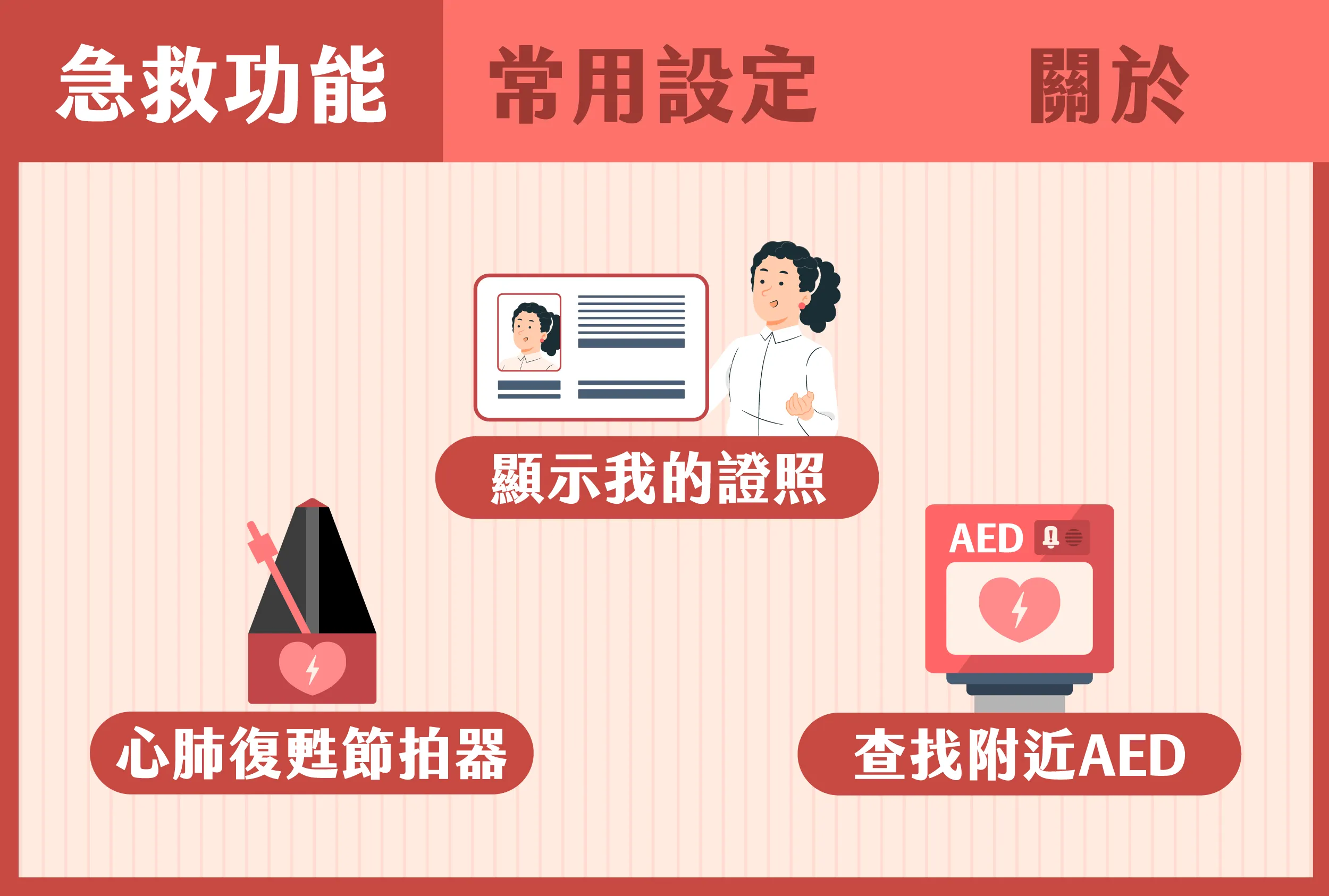
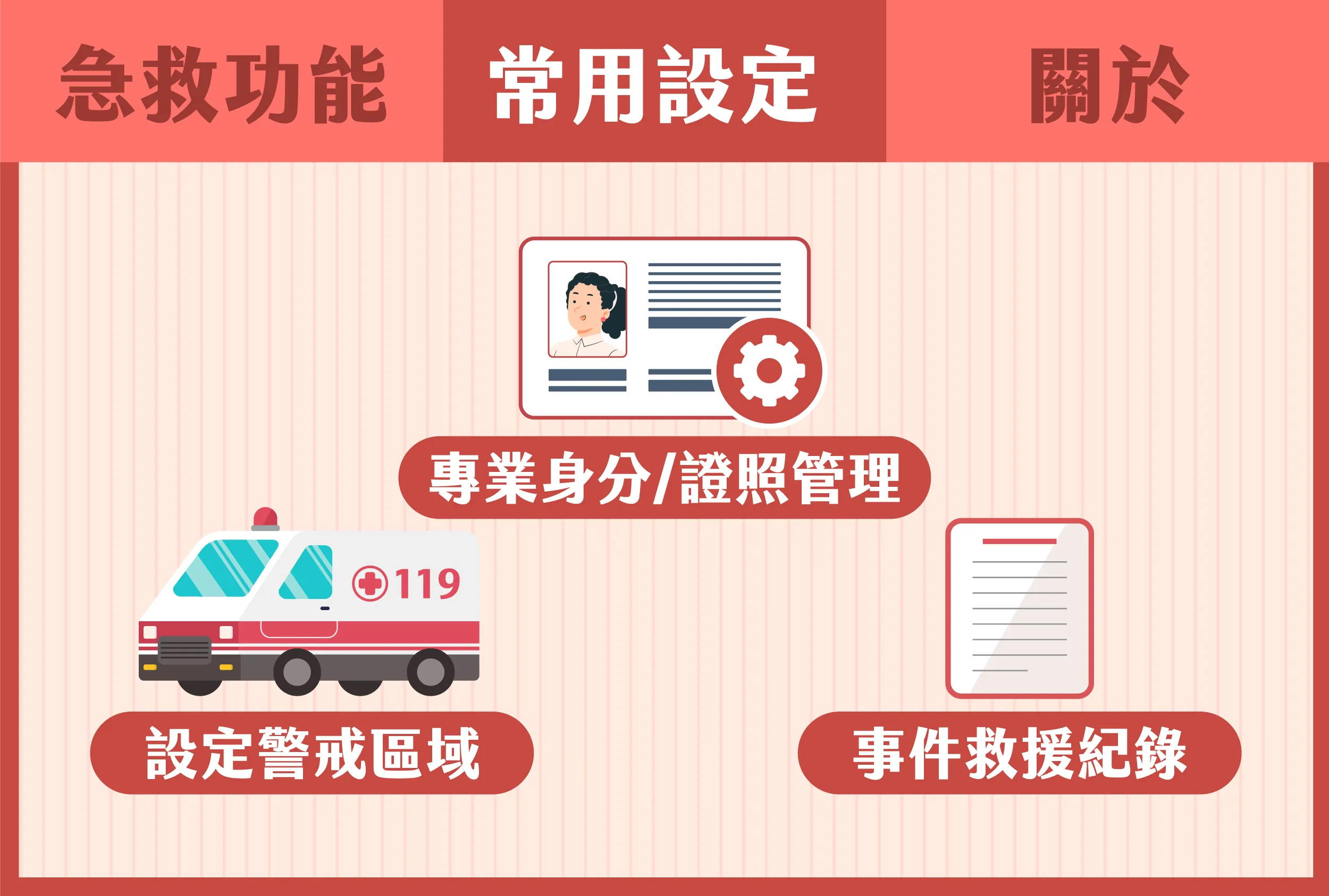
Image source: Hear AED LINE Official Account
The Rich Menu takes up only about a third of the phone screen, yet it packs in a lot of functionality. Open the current Hear AED LINE account, register as a member, and you’ll see a rich set of features. Through several rounds of interviews with the client, we distilled the user flow down to a few core directions:
1. Keep high-frequency functions accessible within a small footprint The LINE Rich Menu takes up only about a third of the screen, avoiding interference with the chat content and main view, while still keeping frequently used functions within reach — reducing cognitive load and the chance of mis-taps.
2. Show a different Rich Menu depending on login state The system automatically switches the Rich Menu content based on the member’s login status. When logged out, it emphasizes registration, device lookup, and AED training content; once logged in, it shifts to personalized functions like case reporting, coverage area, and a member center.
3. Make the member center more than just an account page Beyond basic profile management, the member center also integrates a personal coverage area, mission history, assistance count, and personal achievements. Users can more intuitively see their own participation history and accumulated impact, boosting their motivation to stay engaged.
Automated push notifications: a critical piece of event tracking
For message notifications, we broke this into two core requirements, both solved using the LINE Messaging API:
1. Not just mass broadcasting — precise targeting The system can automatically push notifications to the appropriate users based on conditions like region, coverage area, and member status, making notifications more timely and relevant, and avoiding the disruption of irrelevant alerts.
2. Continuing to track response after a case occurs After receiving a notification, users can report whether they’ve arrived on scene to help. The back office continuously tallies actual attendance, response rates, and case-handling status — so the system doesn’t just send notifications, it genuinely tracks what happens after.
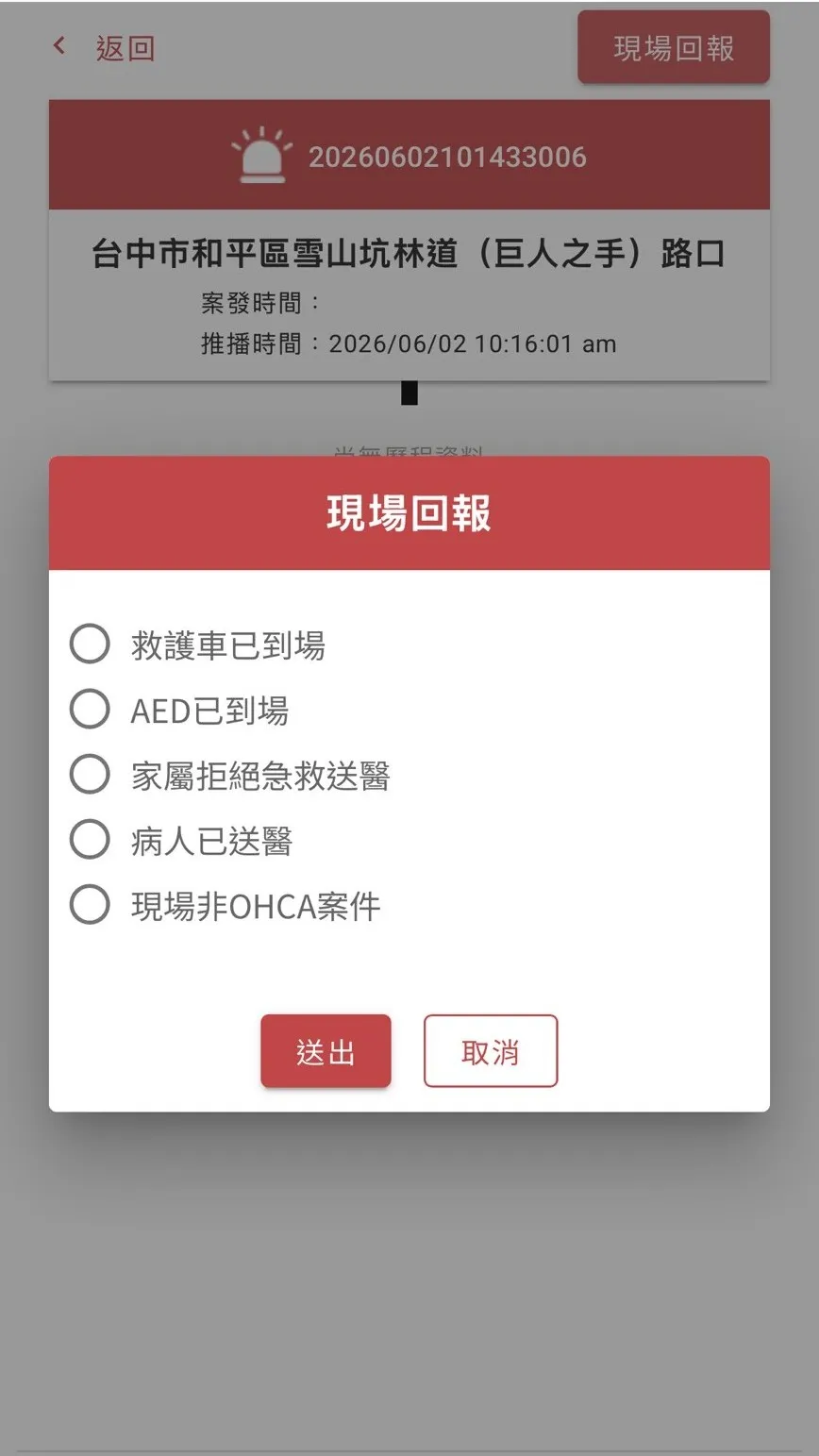
Image source: Hear AED LINE Official Account
---The system growing alongside its user base
As Emson tirelessly promoted the platform and its LINE account user base grew, we continued taking in new requirements and turning them into practical new features, making the system better and better over time.
- Membership system: awards points based on activity level, like number of times someone showed up on scene, building community identity
- Professional identity/certification verification: distinguishes general members of the public from medical professionals, with professionals unlocking advanced functionality
- Real-time on-scene reporting: responders can post live updates, giving others visibility into on-scene conditions
- Back-office automation: automated scheduling for things like tagging, certification expiration, and review status, so staff can quickly get the key information they need
A well-designed system is one that can keep expanding its feature set — every change comes from careful, deliberate logic planning to avoid conflicts as versions evolve.
The core lesson from this project
Technology always has to come back to “how will people actually use this.” A LINE Official Account isn’t the coolest solution, but it’s the one most likely to actually get used.
The challenge with nonprofit projects is limited resources paired with an unusually high cost of error. We spent a lot of time on this project deciding “what not to build” — every feature we cut was in service of making the core flow more stable, faster, and easier to use in an emergency.
In the end, the system is just a means to an end. Getting help to every person who goes down, faster — that’s the goal.
Related Case Studies
Government & Public Services
Bilingual AI Tour Guide: A LINE Official Account for Multilingual Visitor Support
Motor vehicle offices handle a huge range of services. We built a bilingual (Chinese/English) AI guide on a LINE Official Account, using a Retrieval-Augmented Generation (RAG) architecture so foreign residents can ask questions freely in English and get instant guidance on the services they need.
Government & Public Services
Chiayi DMAT Deployment Inventory System: Digitizing Disaster Relief Logistics
How much medical supply can there be? Not even a single needle can go unaccounted for! We built a three-phase deployment inventory system from the ground up for the Chiayi Disaster Medical Assistance Team (DMAT), integrating inventory in/out tracking, a packing module, deployment templates, and an offline version — dramatically cutting the pre-deployment prep time for the rescue team.
Government & Public Services
Personnel Accountability System
The fundamental difference between public-safety systems and typical commercial applications. Built from scratch: an IP67-rated Beacon hardware device, iOS/Android on-scene personnel tracking apps, and a back-office system, integrated with the API of the National Fire Agency, Ministry of the Interior, and continuously maintained for over five years.
You can get results like this too!
Start with AI requirement analysis and turn your idea into a concrete requirements draft.
Start My AI Analysis