
Anti-Wandering System: Bluetooth Tracking and LINE Location Lookup for Seniors with Dementia
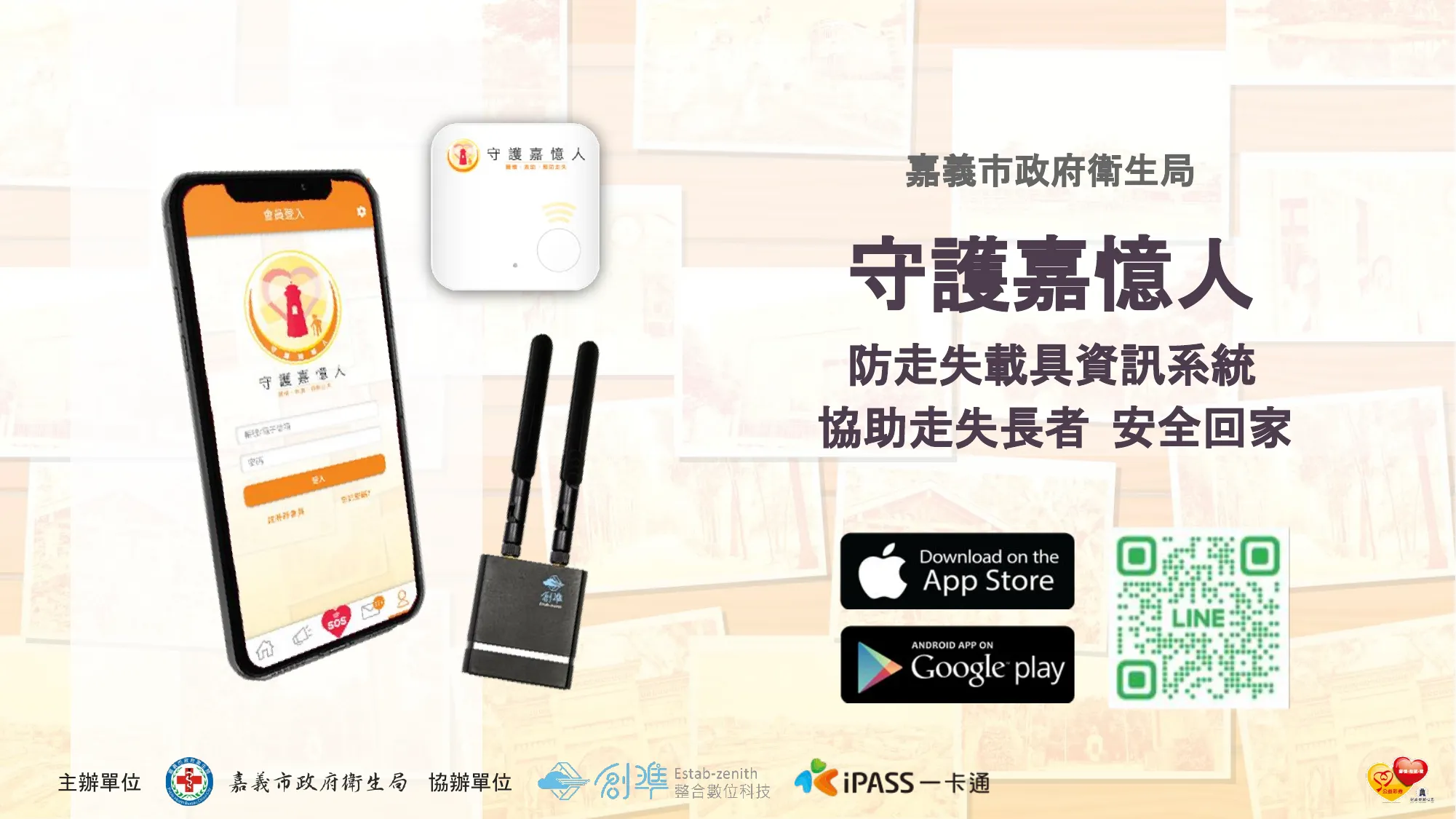
Estab-Zenith's patented Identity Recognition and Network-Based Location Joint Notification System, showcased through Chiayi City's 'Chiayi Guardian' program. This anti-wandering device and information system integrates BLE tags, a mobile app, a multi-function LINE Official Account rich menu, and a citywide network of checkpoint scanners to build a city-wide walking safety net.





Citywide infrastructure
280+ checkpoint scanners deployed across the city
Patented anti-wandering system
Built a citywide safety net
Three-layer protection
Location, alerting, and search coordination, all integrated
Requirements
To protect seniors with dementia citywide, the Bureau of Health, Chiayi City Government commissioned the development of the 'Chiayi Guardian' anti-wandering system. Traditional GPS trackers are bulky, expensive, and something seniors often refuse to wear — the city needed a solution seniors would actually be willing to use, one that blends into daily life while genuinely keeping them safe.
- Seniors with dementia often resist wearing GPS trackers or are reluctant to use them, and the devices require daily charging plus a monthly data plan — a poor fit for their daily habits
- The system had to serve three very different user groups at once — family members, volunteers, and care institutions — each with very different interface and feature expectations
- Using a Bluetooth-broadcasting tag for location tracking inherently requires supporting checkpoint devices, while relying solely on the public downloading an app set too high a barrier to adoption
Let's Solve It!
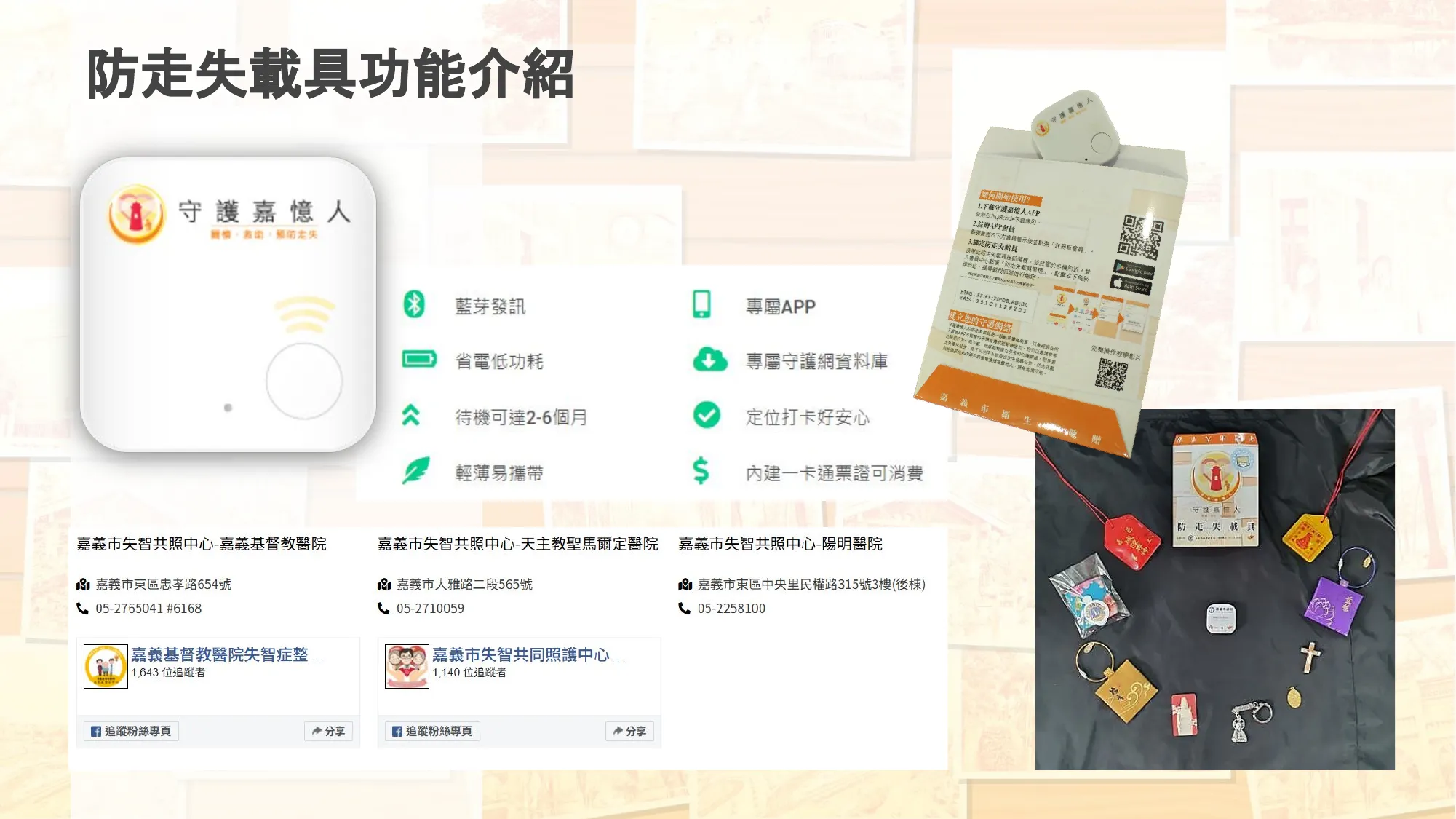
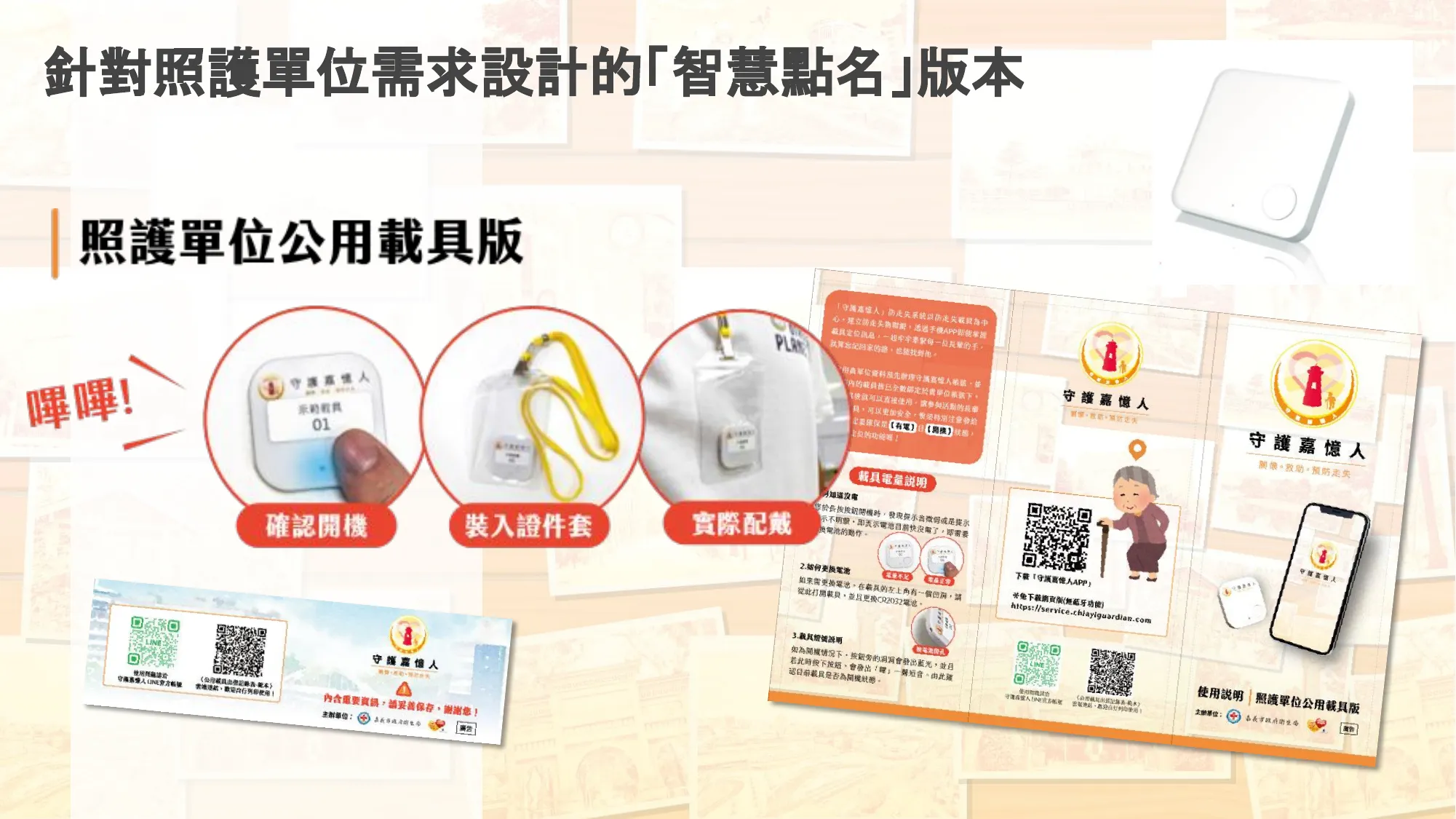
- Adopted a small BLE tag that can be clipped to a keychain, pinned to clothing, or slipped into an ID sleeve — low-power standby lasting 2–6 months, with a user-replaceable battery so there's no need to charge it
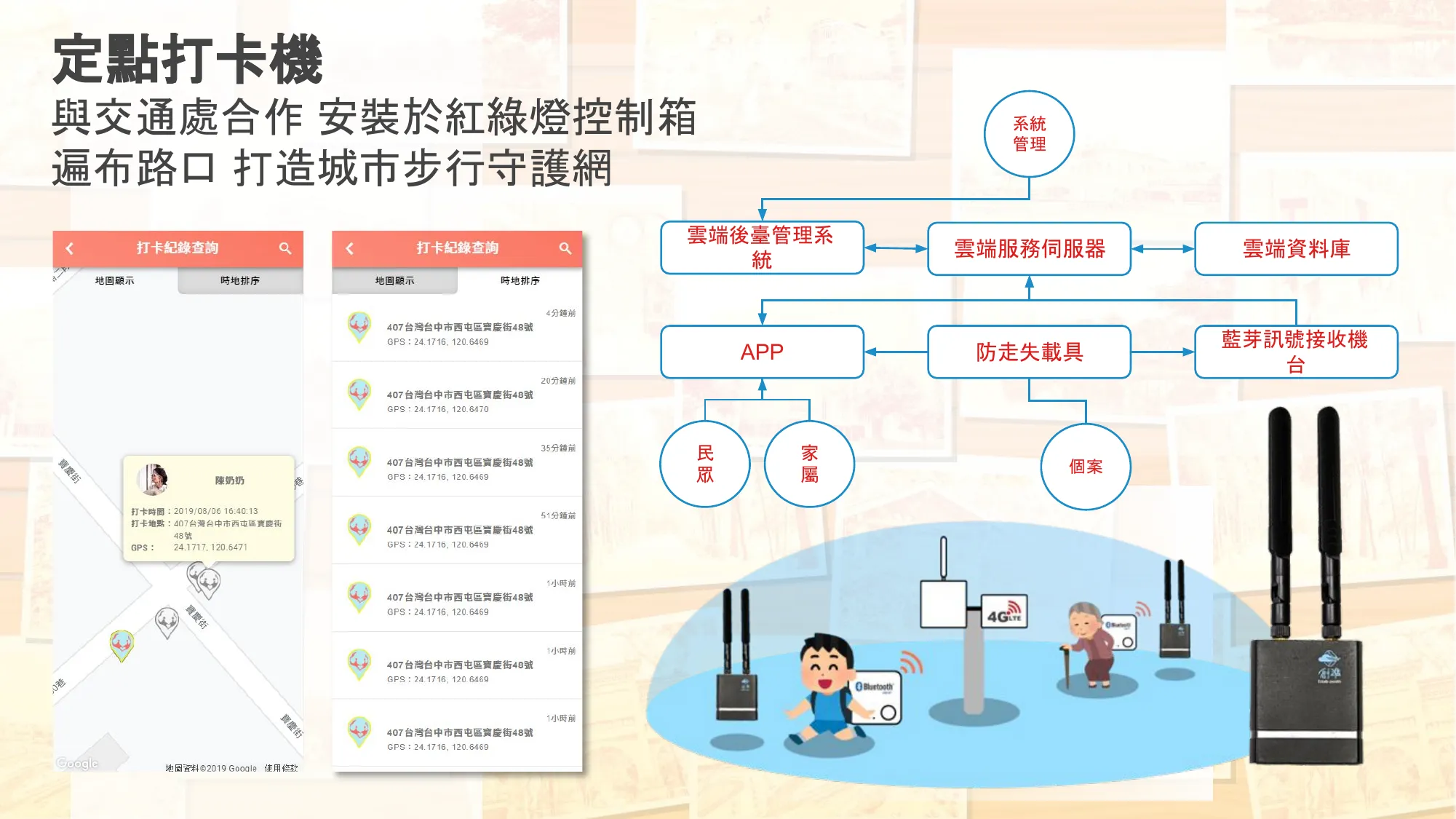
- Partnered with the Department of Transportation, Chiayi City Government to install checkpoint scanners inside traffic-light control boxes citywide, covering intersections across the city to build a citywide walking safety net
- Launched both an app and a LINE Official Account in parallel, so family members can look up location and receive wandering alerts without ever downloading the app
- Rolled out a smart roll-call process and a shared-tag SOP for care institutions, so facilities can issue and manage tags in bulk for group activities
Case Details
“My mom went out yesterday and couldn’t find her way back. A neighbor called me — that’s how I found out.”
This isn’t a rare story — it’s what many families living with dementia face every few days. Taiwan has more than 300,000 people living with dementia, and wandering is one of families’ deepest fears — not because their loved one doesn’t know where they’re going, but because the “familiar route” they’ve walked a thousand times can suddenly, inexplicably, disappear.
The Bureau of Health, Chiayi City Government set out to do one thing: let every senior with dementia step outside and walk the city with peace of mind.
Successfully reducing the feeling of “being monitored”
The most intuitive idea was to have seniors carry a GPS tracker. But our early-stage evaluation quickly showed this direction wouldn’t work.
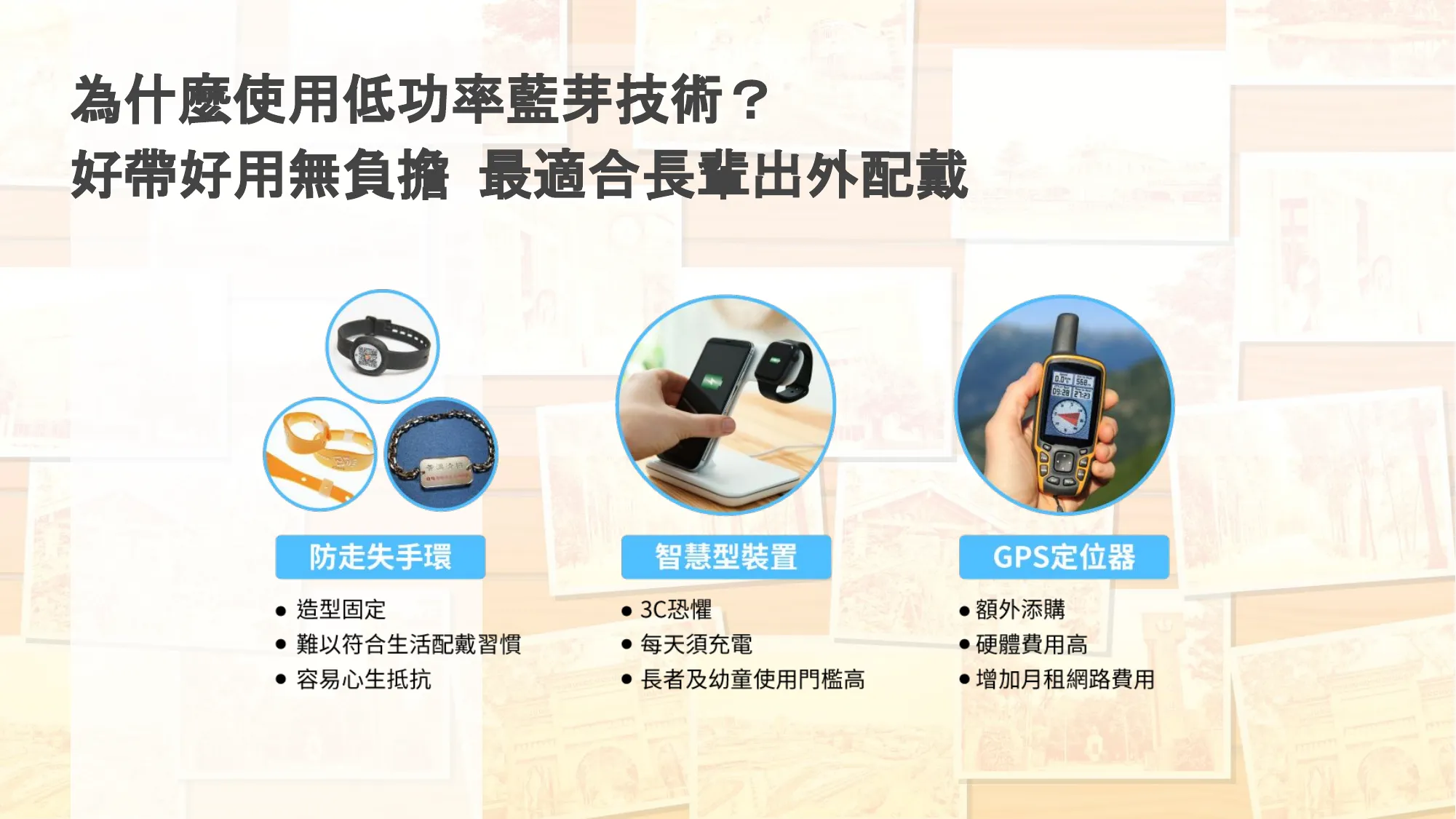
GPS wristbands have a fixed form factor that doesn’t fit naturally into daily wear, and seniors tend to resist them; smart devices carry a high barrier to entry for this age group and need daily charging; standalone GPS locators require an extra purchase, come with a high hardware cost, and add a monthly data-plan fee on top. All three options had real drawbacks — none of them truly fit a senior’s daily life.
So we reframed the design goal: make the device blend into daily life — unobtrusive, not something you have to think about.
We landed on a small Bluetooth Low Energy (BLE) tag as the technical core of the anti-wandering device. Seniors can clip it to a keychain, pin it to their clothes, or slip it into a pouch they already carry. Standby lasts 2 to 6 months with no charging and no operation required — it even works with the iPASS transit card system, so seniors can use it to pay when they’re out. Like an unremarkable little button, its extreme simplicity in both form and function is exactly what gives users the most flexibility.
Everyday protection, emergency search — three layers of coverage
Layer 1: A citywide walking safety net
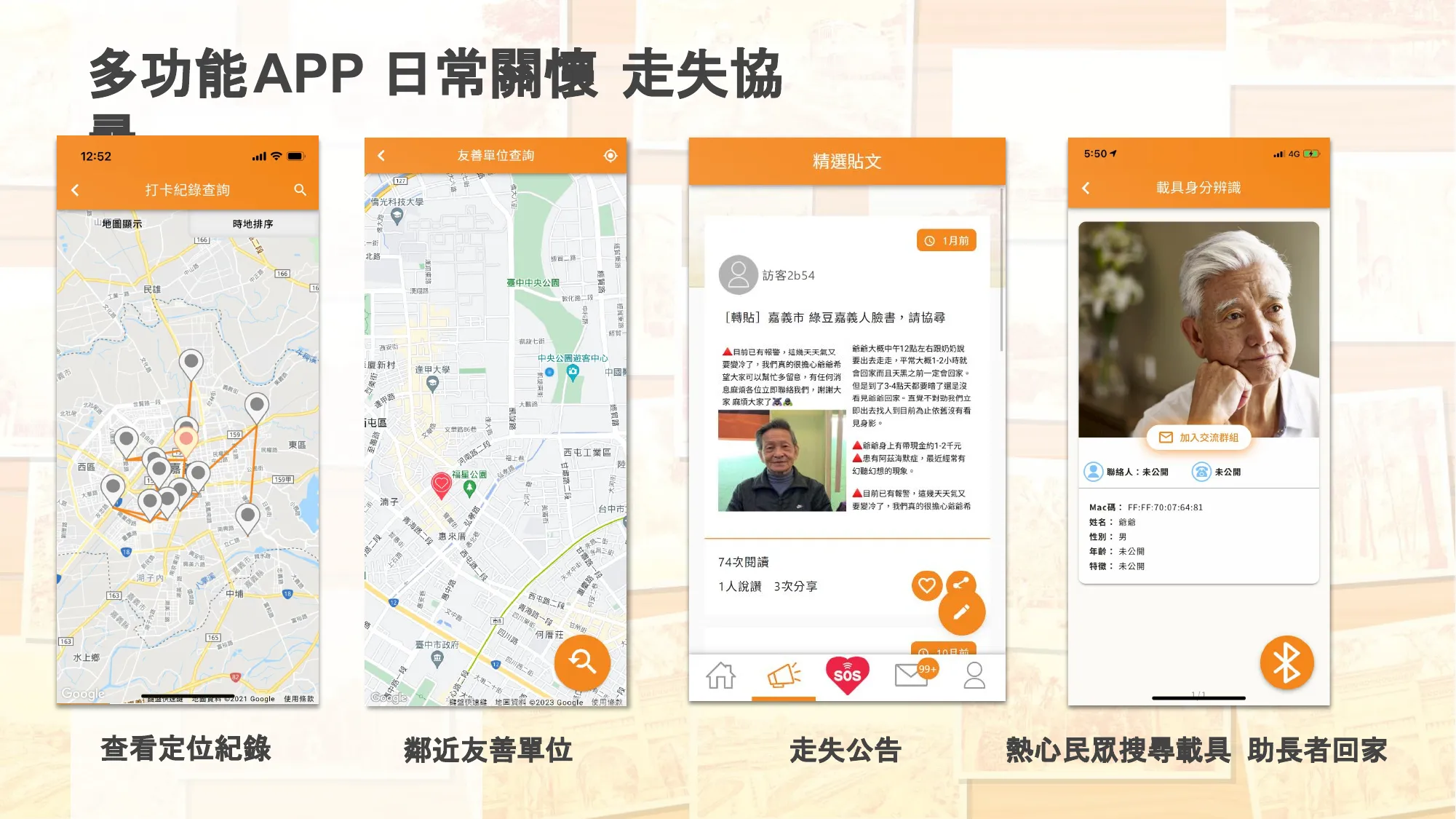
We partnered with the Department of Transportation, Chiayi City Government to install checkpoint scanners inside traffic-light control boxes at intersections across the city, covering the main streets to build a citywide walking safety net. When a senior passes through an intersection, the checkpoint scanner automatically picks up the Bluetooth signal and logs the location and time. Family members or social workers can look up the most recent location record through the app or the LINE Official Account, without ever having to call and ask “where are you?”
Layer 2: Wandering alerts
If a family member notices something off in a senior’s location history — say, straying outside their usual daily range, or losing contact with them — they can publish a wandering alert through the system, updating the senior’s last-known location to provide a critical clue for the search.
Layer 3: Community search
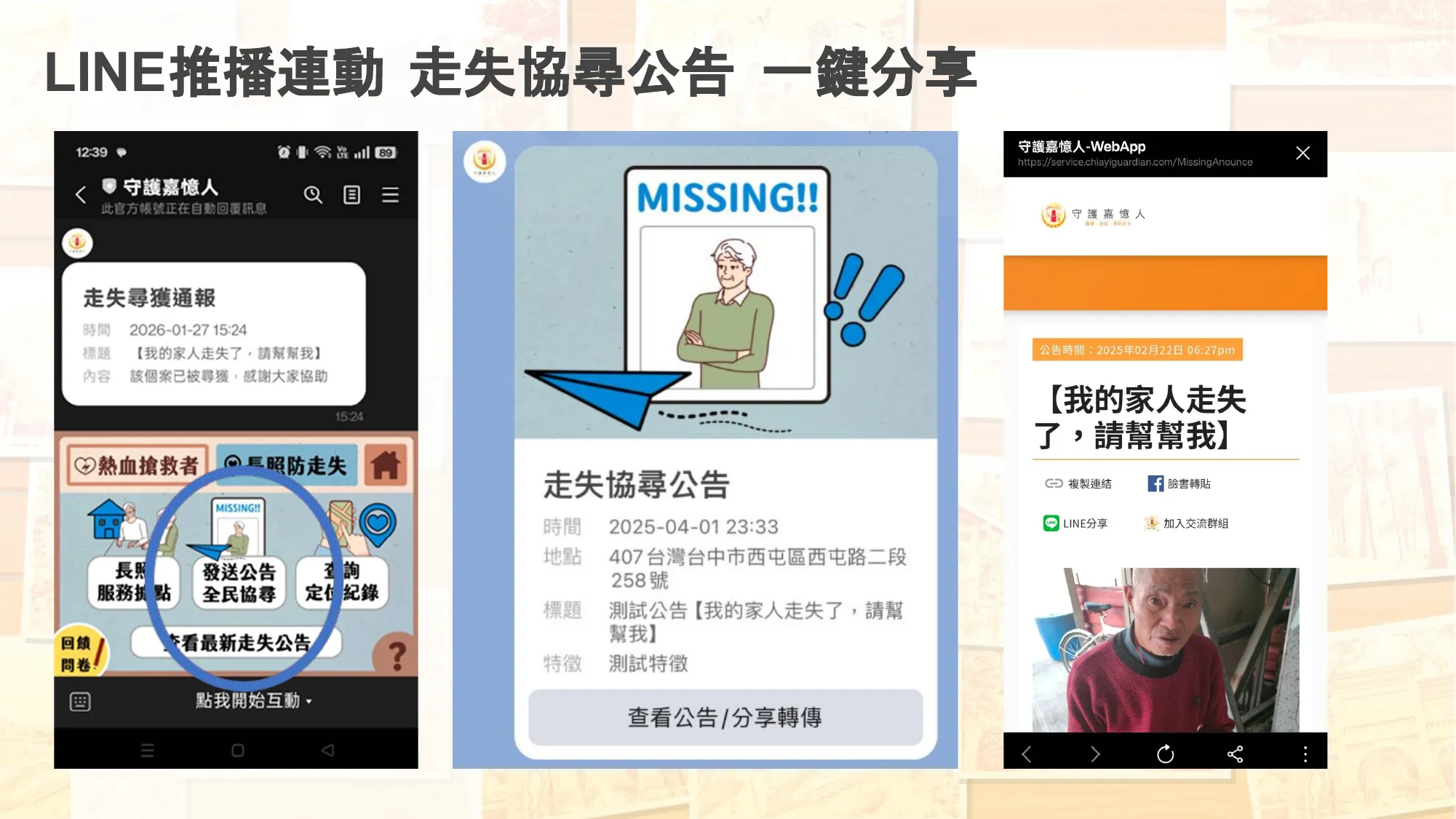
Once wandering is confirmed, the system sends a search alert with one tap, pushing a LINE notification to nearby volunteers and members of the public. If a passerby spots someone who looks like they may be lost, their phone automatically scans for the Bluetooth signal — or they can search manually — to confirm identity and contact the family, all without ever alarming the senior.
Challenges along the way
Three user types, three sets of habits
The system had to serve three very different user types at once: family members (anxious, wanting real-time alerts), the general public (unwilling to download an app), and care-institution staff (needing to manage tags and roll calls in bulk). Their expectations for the interface and features diverged sharply, and reconciling all three within a single system was the most labor-intensive part of the design.
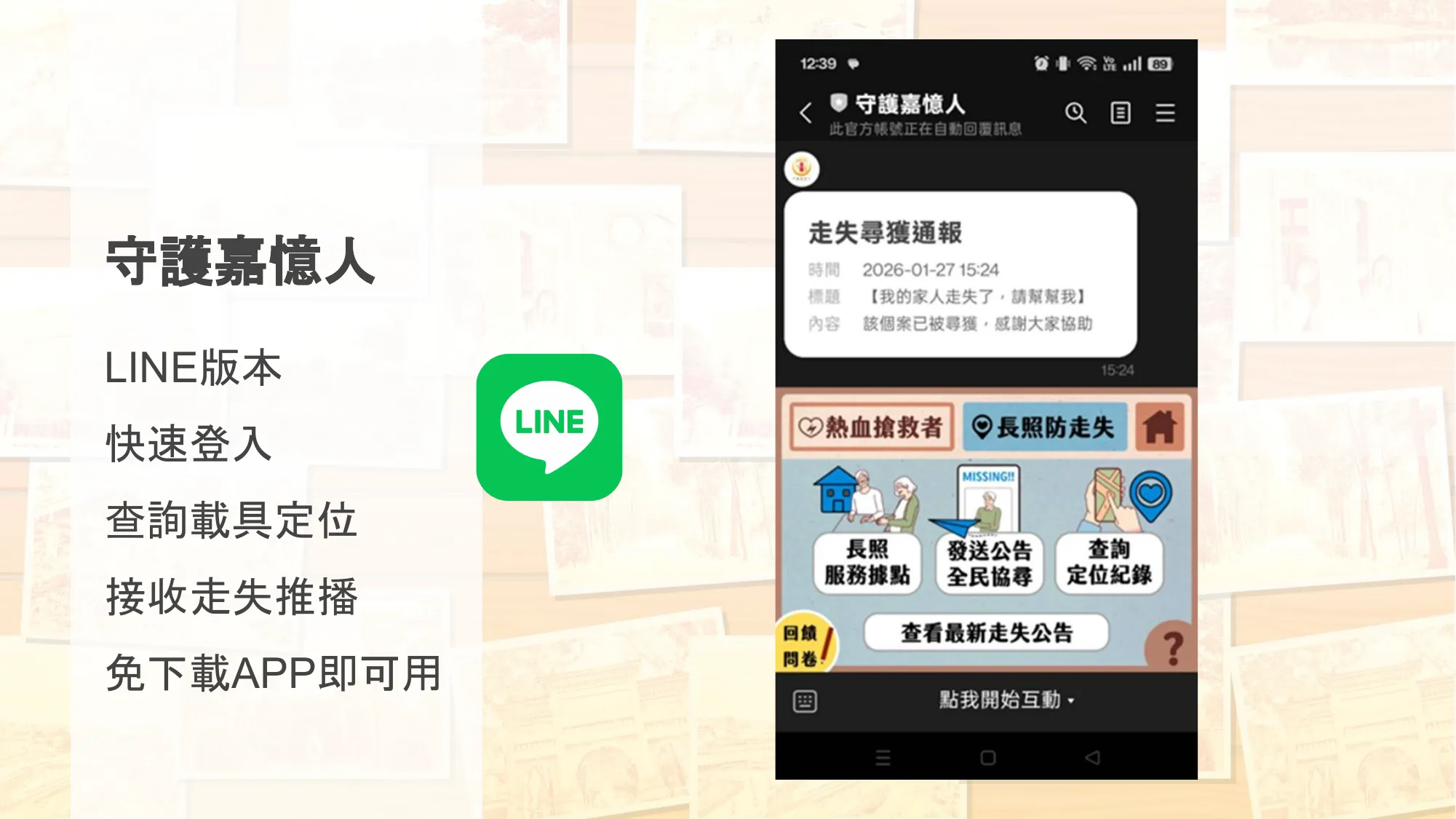
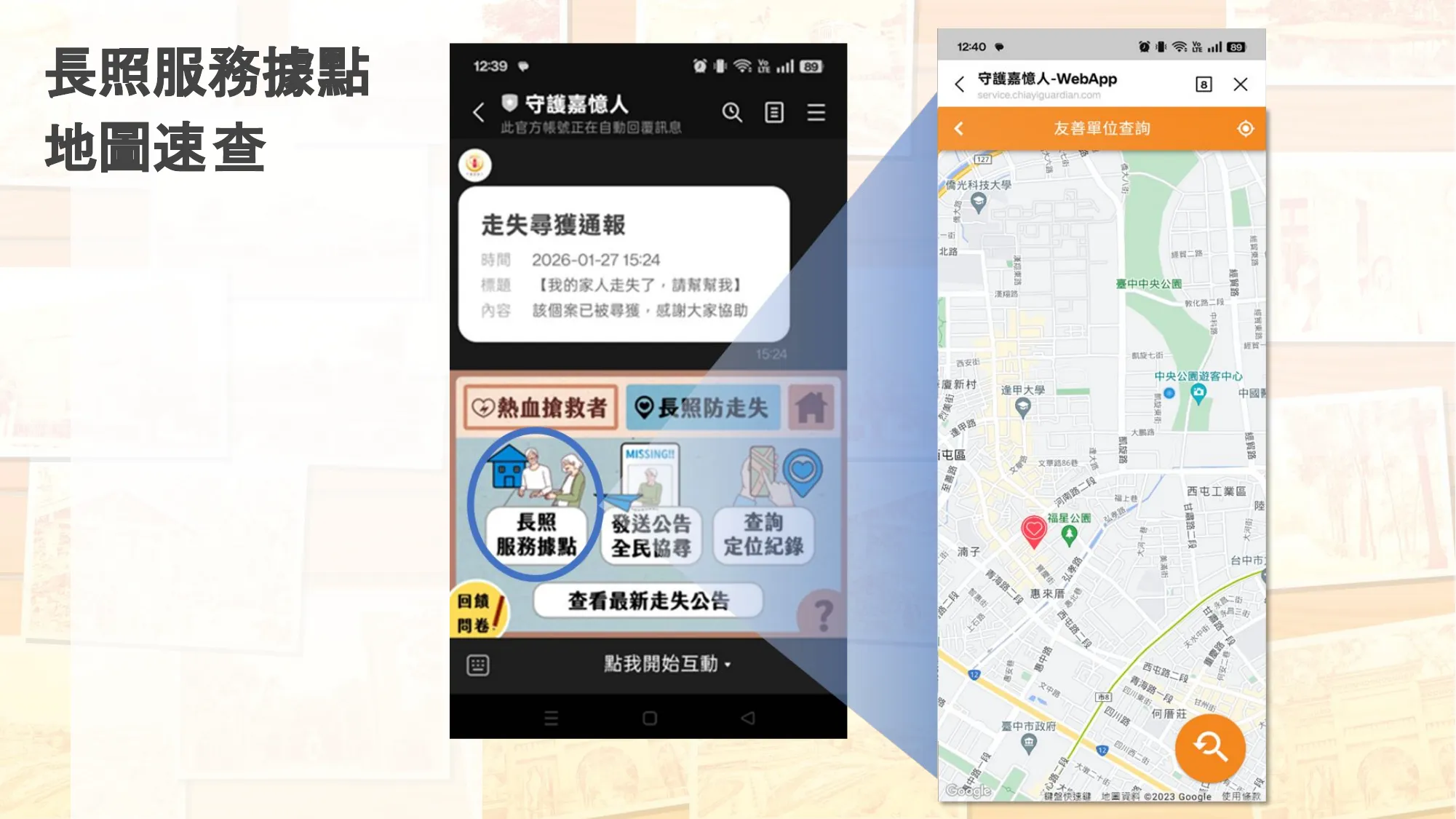
Our solution was two parallel entry points: the app lets family members view location history, search for nearby partner organizations, and publish wandering alerts; the LINE Official Account lets family members, once their account is linked, look up locations, receive wandering alerts, and browse a map of long-term care service locations — all without downloading the app. By using the tool families already know best, we lowered the barrier to adoption.
Through the LINE OA, family members can also quickly find nearby long-term care service locations, without having to call around to ask.
Checking a tag’s location history is the feature family members use most. It used to be available only through the app — now it’s visible directly inside LINE.
Bulk management for care institutions
Beyond individual families, care institutions need to check out tags in bulk when taking seniors on outings, then verify every single tag has been returned afterward. We designed a smart roll-call workflow for exactly this, letting institution staff manage every tag systematically.
For the shared-tag version used by care institutions, staff confirm the device is powered on and inserted into an ID sleeve before a senior wears it; at the end of the activity, a button press triggers a confirmation tone for the tag’s return.
This pairs with a standard SOP: power-on and registration before the activity, wearing during the activity, and one-by-one check-in and return afterward — keeping the entire process fully accountable.
Results
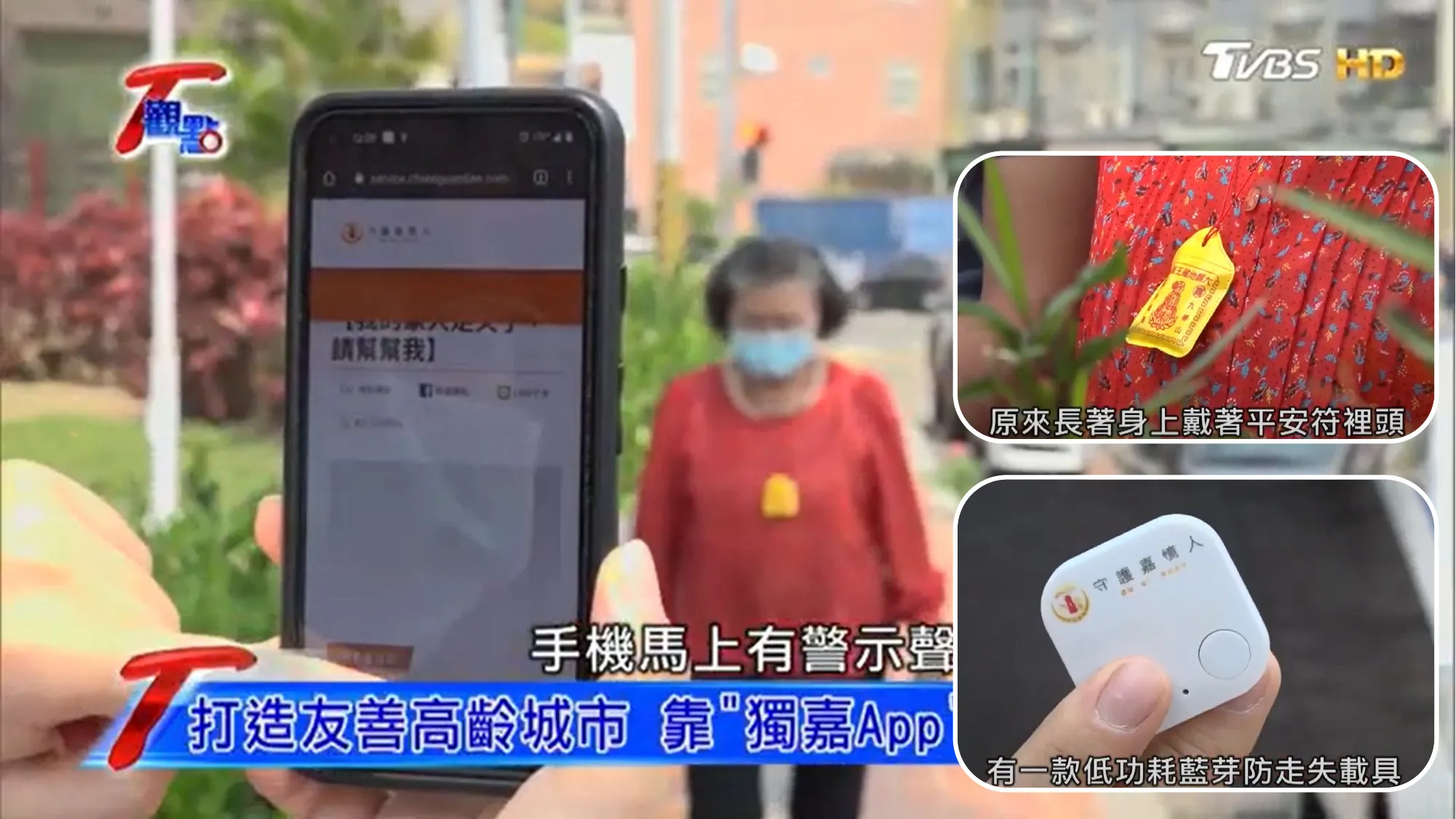
After launch, the system was featured in a TVBS news segment titled “Building an Age-Friendly City with Chiayi Guardian,” which explained how this citywide safety net works.
Beyond the numbers, what stays with us are the words from families: “Grandpa can finally go grocery shopping on his own again.”
Not because the system is foolproof, but because this safety net brought the risk of “going outside” down to a level families could live with.
Core technology
- Bluetooth anti-wandering tag: low-power BLE device, lightweight and hands-off, 2–6 months of standby, with built-in iPASS transit card functionality
- Checkpoint scanners: installed in traffic-light control boxes at intersections citywide in partnership with the Department of Transportation, Chiayi City Government, automatically reading Bluetooth signals
- Back-office system: location logging, wandering alerts, search coordination, and a care-institution roll-call module
- Family-facing side: dual-channel location lookup and push notifications via app and LINE Official Account
- Search-and-rescue side: one-tap sharing of wandering alerts via LINE push, with passersby able to identify a tag through a simple Bluetooth scan on their phone
- Utility patent: Identity Recognition and Network-Based Location Joint Notification System
The core lesson from this project
Technology plays a supporting role; trust is the lead.
Seniors are willing to wear that small device because they see it as a sign of their family’s care; searchers respond within three minutes of a push notification because they feel it matters. Sometimes the answer isn’t flashy hardware features — it’s designing an information system that fits how people actually behave, and that’s what creates a safe environment every kind of user can trust.
Related Case Studies
Education & Social Impact
新北幼幼歡樂多語影音秀: A Platform for Registration, Video Showcase, and Online Voting
Built for six consecutive years for the Education Department, New Taipei City Government, this annual event platform for 新北幼幼歡樂多語影音秀 brings together online registration, entry showcases, online voting, and a real-name verification system that prevents duplicate voting — letting the multilingual creations of preschool teachers and children across the city reach a much wider audience through a digital platform.
Education & Social Impact
Wunfu Elementary School: Green Mobility in the City — A Plastic-Reduction Guide Built by Students
High-quality low-carbon travel content, created by a group of elementary school students! The site brings together five student-designed routes, must-see stops, and a bilingual map of plastic-reduction-friendly businesses — blending local history and culture to turn classroom action into a public-facing digital platform.
You can get results like this too!
Start with AI requirement analysis and turn your idea into a concrete requirements draft.
Start My AI Analysis